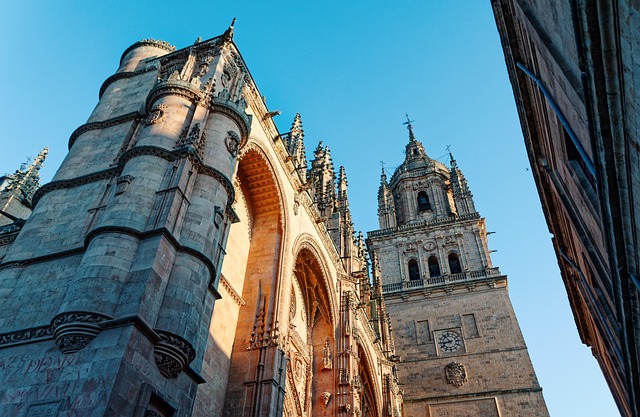
Spanish Golden Age
In the Spanish Golden Age, it had produced great literature...
The Spanish Golden Age, or Siglo de Oro, was a period of flourishing arts and letters that coincided with the political rise of the Spanish Empire. Spanning roughly from the late 15th to the mid-17th century, this era saw the birth of modern literature. Miguel de Cervantes authored Don Quixote, often cited as the first modern novel, which satirized chivalry while exploring the human condition. Simultaneously, playwrights like Lope de Vega and Calderón de la Barca revolutionized the stage with thousands of plays that combined wit, honor, and complex philosophy. This cultural explosion transformed Spain into a global intellectual powerhouse.
The Reconquista
The Reconquista lasted for over seven hundred years...
The Reconquista was a pivotal, multi-century era in the Iberian Peninsula, stretching from the initial Umayyad conquest in 711 until the fall of Granada in 1492. This period was not a single, continuous war but rather a complex series of shifting alliances, intermittent battles, and long stretches of peaceful coexistence known as convivencia. Christian kingdoms in the north, such as Asturias, Castile, and Aragon, gradually expanded their territories southward against various Muslim states. This prolonged struggle deeply shaped the Spanish national identity, blending military fervor with religious mission. The process finally concluded when the Catholic Monarchs, Isabella I of Castile and Ferdinand II of Aragon, successfully conquered the Nasrid Kingdom of Granada. This victory unified Spain under a single Christian monarchy and set the stage for the country's subsequent age of global exploration and imperial expansion.
The Visigoths
The Visigoths established their capital in Toledo...
The Visigothic Kingdom's decision to establish its capital in Toledo during the mid-6th century marked a transformative era for the Iberian Peninsula. Originally a Roman municipality, Toledo’s strategic, elevated position surrounded by the Tagus River made it an ideal defensive stronghold and a symbolic center for a unifying monarchy. Under King Leovigild, the city became the heart of a kingdom that sought to consolidate various Germanic tribes and the existing Hispano-Roman population into a single political entity. This period was characterized by the famous Councils of Toledo, which were ecclesiastical and political assemblies that shaped the legal and religious landscape of the region for centuries.
Monuments
The Romans built many lasting monuments across Spain...
The Roman conquest of the Iberian Peninsula, which they called Hispania, began in the 3rd century BC and left an indelible mark on the landscape that persists to this day. Over several centuries, Roman engineers and architects transformed the region into one of the most urbanized and prosperous provinces of the empire. They constructed a sophisticated network of stone roads, such as the Via Augusta, which connected major cities like Tarraco and Hispalis to Rome itself. Beyond infrastructure, the Romans erected monumental structures that served as symbols of imperial power and civic pride, many of which remain remarkably intact.